A gastric research peptide investigated in models of tissue, tendon, blood-vessel and gastrointestinal healing
Overview
BPC-157 is a synthetic 15-amino-acid peptide that the literature describes as a stable gastric pentadecapeptide. Its name, BPC, is short for Body Protection Compound — a nod to its conceptual roots in sequences linked to protective proteins of the gastrointestinal tract [1,2]. Most of the interest in BPC-157 has come from preclinical work, in which the peptide has been examined in models of gastrointestinal injury, wound healing, tendon and ligament injury, angiogenesis, nerve injury, liver injury and inflammation [1-5]. The evidence in humans, however, lags far behind the evidence in animals. Given the contrast between the breadth of preclinical research and the lack of large clinical trials, BPC-157 illustrates clearly how a molecule can show intriguing biological potential while lacking the clinical basis needed to judge efficacy and safety in humans.
Biological Mechanism
There is no settled consensus on exactly how BPC-157 works. Studies point to involvement in angiogenesis, blood-vessel maintenance, the NO response, cell migration, regulation of inflammation and remodelling of collagen and the extracellular matrix [3-6]. Work on tendon cells found that BPC-157 increased cell survival, migration and spreading — processes that matter for connective-tissue repair [1]. A separate rat-model study reported that BPC-157 may contribute to ligament healing, with improvements in structural and functional measures [2]. The angiogenesis link deserves particular attention. Research published in the Journal of Molecular Medicine associated the pro-angiogenic activity of BPC-157 with activation of the VEGFR2-Akt-eNOS pathway [6]. While new blood-vessel formation can support healing, angiogenesis is not always desirable in every biological setting. The same mechanism therefore drives research interest and, at the same time, calls for caution.
Research Evidence
Within tendon-injury models, much of the work on BPC-157 has centred on the Achilles tendon. One preclinical study reported faster healing processes in an injured tendon, and subsequent studies supported the idea that the peptide influences tendon cells and the matrix [1,3]. In ligament and connective-tissue models, improvements were reported in measures linked to healing and tissue integrity [2]. A 2019 review in Cell and Tissue Research summarised the data on BPC-157 in musculoskeletal injury, stressing that most of the evidence derives from animal experiments and laboratory systems [4]. A wide-ranging 2021 review in Frontiers in Pharmacology characterised BPC-157 as a research compound with effects across many models of wound healing and systemic injury [5]. Even so, such reviews cannot stand in for large, randomised, controlled clinical studies in humans.
Digestive System, Vasculature & Connective Tissue
A recurring theme in the BPC-157 literature is the link between the gastrointestinal system and healing elsewhere in the body. The peptide was characterised as a stable gastric pentadecapeptide, and a large share of the early work concentrated on protecting the gastric mucosa, on ulcers and on models of intestinal injury [5]. The research later broadened to tissues outside the gastrointestinal system, among them tendons, ligaments, muscle, nerve and blood vessels [1-6]. That broadening invites both interest and caution: a molecule that seems active across many models need not act through one clear mechanism. With tendon and ligament injuries, the key question goes beyond closing a wound to restoring mechanical structure. Tendons and ligaments depend on precisely organised collagen, a robust attachment to bone or muscle, a limited yet sufficient blood supply, and coordination between tendon cells and the extracellular matrix. Studies of BPC-157 in tendon cells and orthopaedic models point to a role in cell migration, cell survival and tissue organisation [1-4]. Most of these, however, are not human clinical studies, so they are more useful for understanding mechanism than for establishing a treatment. The vascular connection is among the most complicated aspects. Tissue repair needs angiogenesis and blood-vessel repair; yet switching on vascular pathways is not appropriate in every biological situation. The VEGFR2-Akt-eNOS pathway linked to BPC-157's pro-angiogenic effect accounts for why it has been studied in healing — and equally for why caution is needed in the context of tumours, vascular disease or chronic inflammatory processes [6]. A further significant limitation is that much of the literature is concentrated within particular research groups and repeated models. The preclinical output is relatively large, but broad independent replication is thinner and modern clinical studies are fewer. Any appraisal of the evidence should therefore separate consistency within experimental models from clinical validation. Broad reviews paint an interesting biological picture, but they do not replace randomised, controlled trials in humans [4,5].
Safety & Regulation
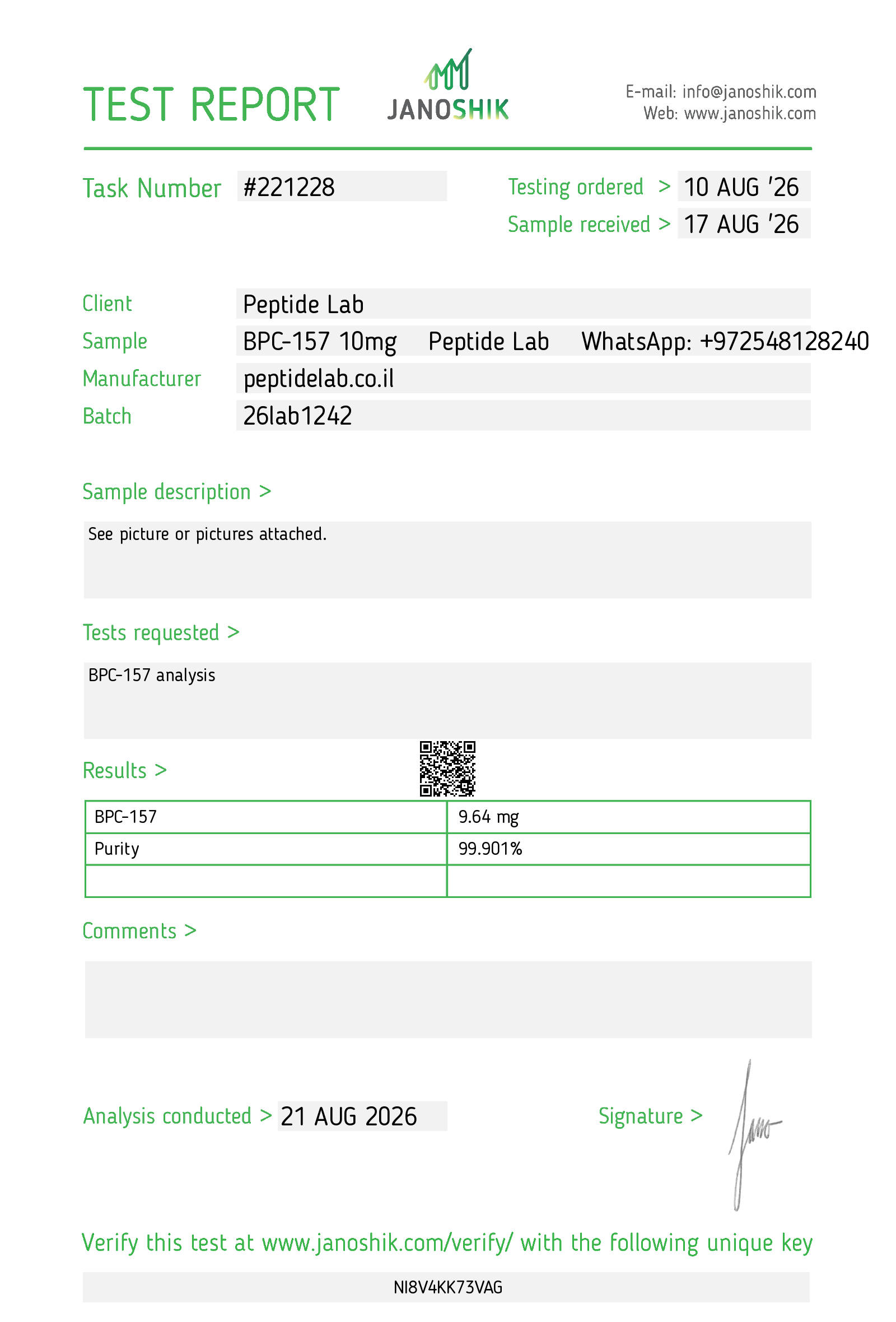
The principal safety gap is the lack of adequate human data. Favourable results in rats or cell models say nothing reliable about pharmacokinetics, degradation, immunogenicity, drug interactions or long-term effects in humans. The FDA lists BPC-157 among substances that may pose safety risks in the context of compounding, citing concerns about immunogenicity, peptide-related impurities and characterisation of the active substance [7]. USADA describes BPC-157 as an experimental substance not approved for routine clinical use, and it is prohibited under WADA rules within category S0 (non-approved substances) [8]. Additional open questions include possible effects on blood vessels, the inflammatory response, tissues undergoing active growth, underlying conditions and prolonged exposure. Each of these demands a firm line between preclinical research and clinical conclusions.
Popularity Versus Clinical Support
How widely BPC-157 is discussed in relation to tendon healing and sports injury does not necessarily mirror the strength of the clinical evidence. The boldest claims usually rest on rat studies, cell cultures and reviews that pool preclinical models [1-5]. These studies have value, but they leave open questions such as variation between individuals, safety with repeated exposure, effects in the presence of underlying conditions, material quality and the tracking of functional outcomes. What counts as "healing" also varies from model to model. In the laboratory, researchers can measure cell migration, protein expression, microscopic structure or the mechanical strength of tissue. In a person, tendon or ligament healing encompasses pain, range of motion, return to function, risk of re-rupture, compatibility with physiotherapy rehabilitation and effects on neighbouring tissues. An improvement in one measure in an animal model therefore does not necessarily translate into a better overall clinical outcome. Chemical identity and quality raise a further question. Because BPC-157 is a synthetic peptide, variation in manufacturing, purity, degradation products and chemical characterisation can alter both the meaning of the research and the potential risk [7]. This is particularly relevant for substances that are not approved medicines and are not always produced within a consistent regulatory framework. The selection of outcomes in future research also matters. Rather than relying on microscopic measures or reports of "accelerated healing", a clinical study would need to assess real function: return to movement, pain over time, tissue strength, re-injury rates, the need for surgery or further treatment, and late adverse effects. Without outcomes of this kind, it is hard to tell whether a biological effect observed in the laboratory carries genuine medical value. Future studies should also build in systematic safety monitoring rather than simply describing local improvement, since tissue healing involves blood vessels, the immune system and growth processes as well [5-7].
Summary
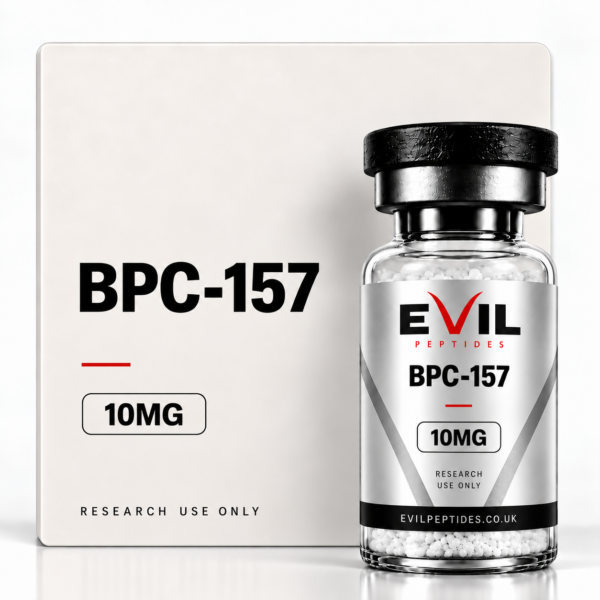
BPC-157 is a research peptide investigated in preclinical models of tissue, tendons, ligaments and the digestive system, together with pathways of cell migration, angiogenesis and the extracellular matrix [1-6]. Human evidence is very limited and the safety picture remains incomplete. It is a molecule of research interest only, not an established clinical platform, and the material is supplied for laboratory research use only.
Selected Research Sources
- Chang C.H. et al. Pentadecapeptide BPC 157 enhances the growth hormone receptor expression in tendon fibroblasts and improves tendon healing. Journal of Applied Physiology, 2011. PMID: 21030672
- Cerovecki T. et al. Pentadecapeptide BPC 157 improves ligament healing in the rat. Journal of Orthopaedic Research, 2010. PMID: 20225319
- Krivic A. et al. An effective therapy of transected quadriceps muscle in rat: gastric pentadecapeptide BPC 157. Journal of Orthopaedic Research, 2006. PMID: 16211507
- Gwyer D. et al. The role of BPC 157 in musculoskeletal soft tissue healing. Cell and Tissue Research, 2019. PMID: 30915550
- Seiwerth S. et al. Stable Gastric Pentadecapeptide BPC 157 and Wound Healing. Frontiers in Pharmacology, 2021. PMID: 34267654
- Hsieh M.J. et al. Pro-angiogenic effects of BPC 157 are associated with VEGFR2 activation and downstream signaling. Journal of Molecular Medicine, 2017. PMID: 27847966
- U.S. Food and Drug Administration. Safety risks associated with certain bulk drug substances nominated for use in compounding. Entry for BPC-157. FDA.gov
- USADA. BPC-157: Experimental peptide prohibited under WADA S0 category. USADA.org

Reviews
There are no reviews yet.