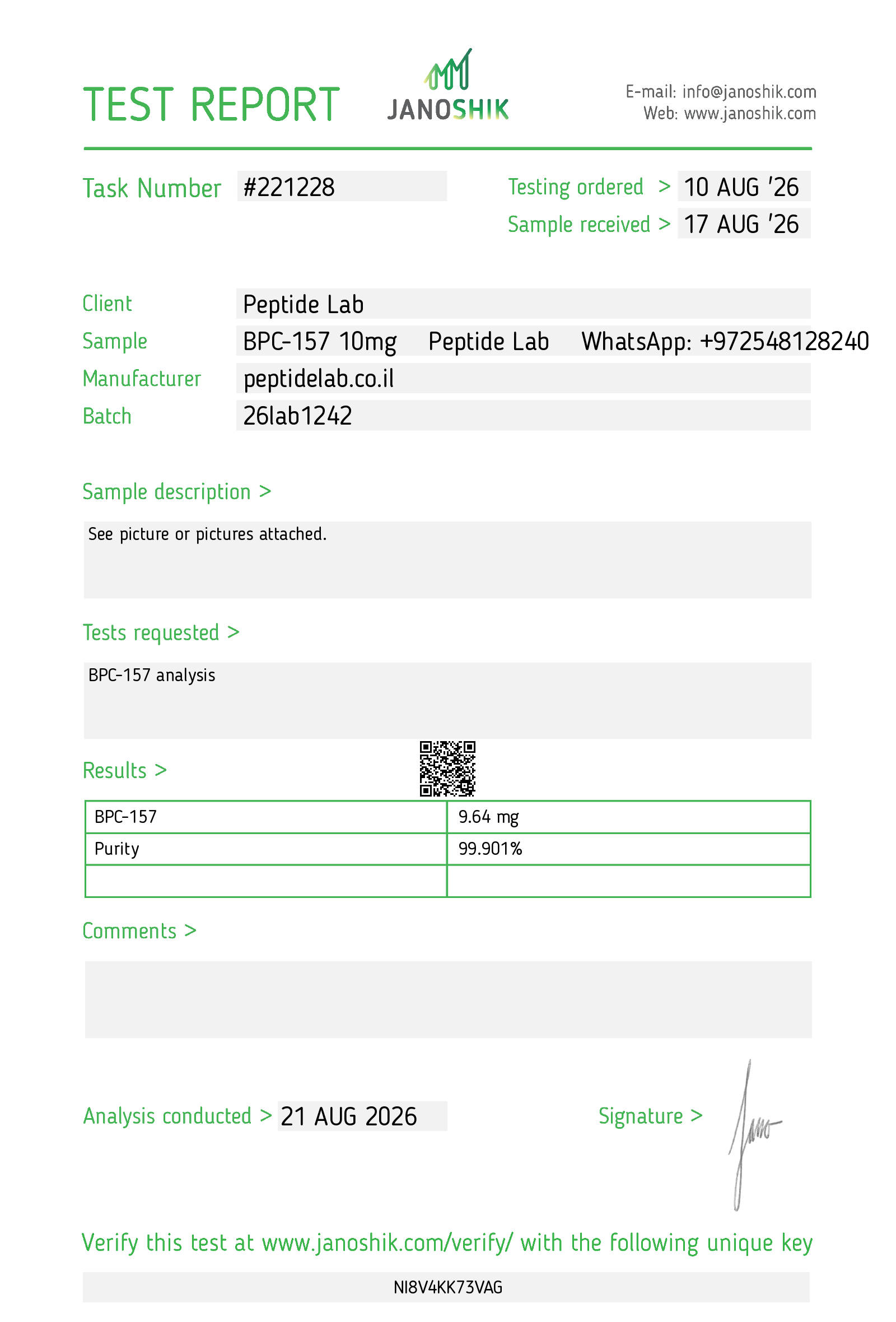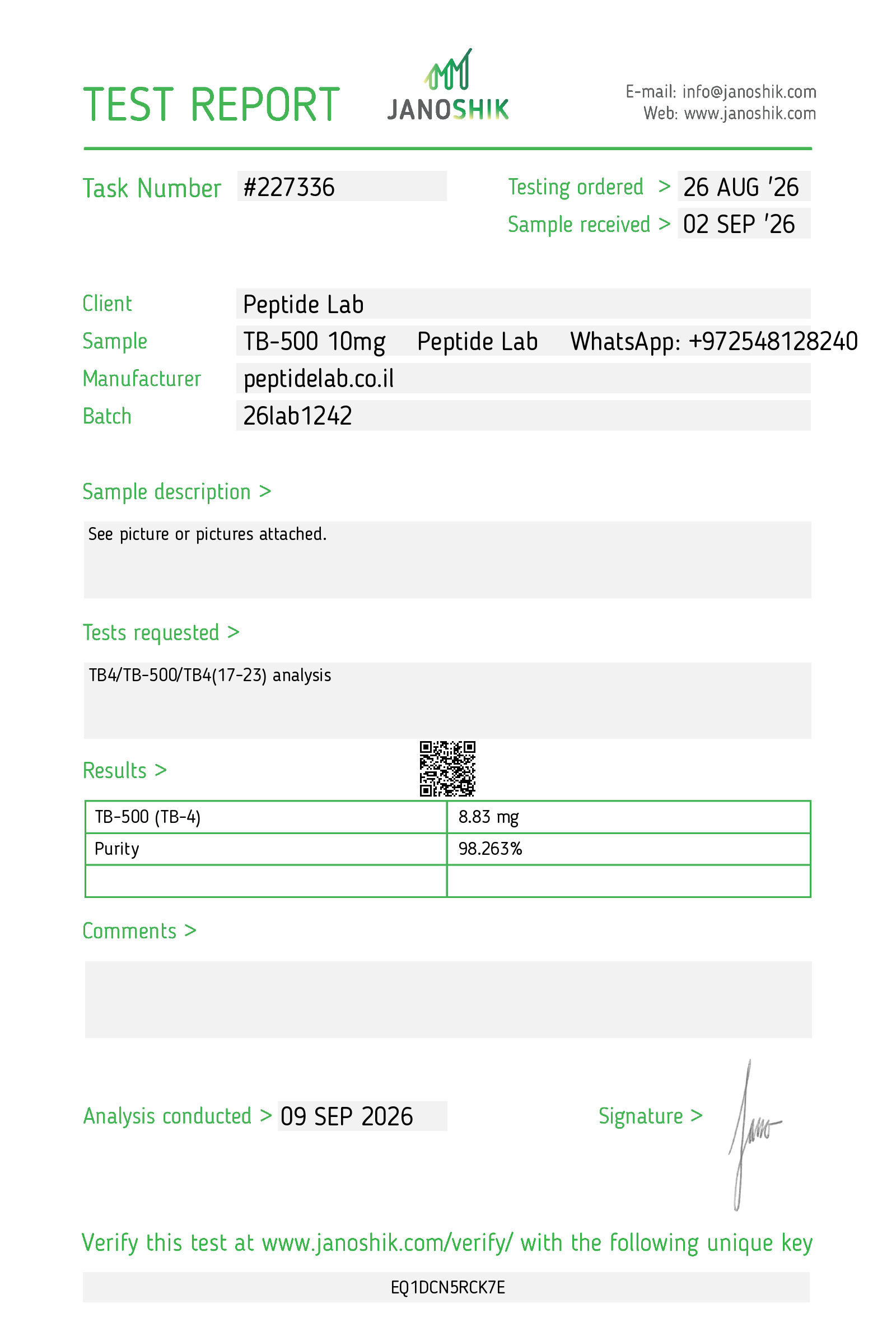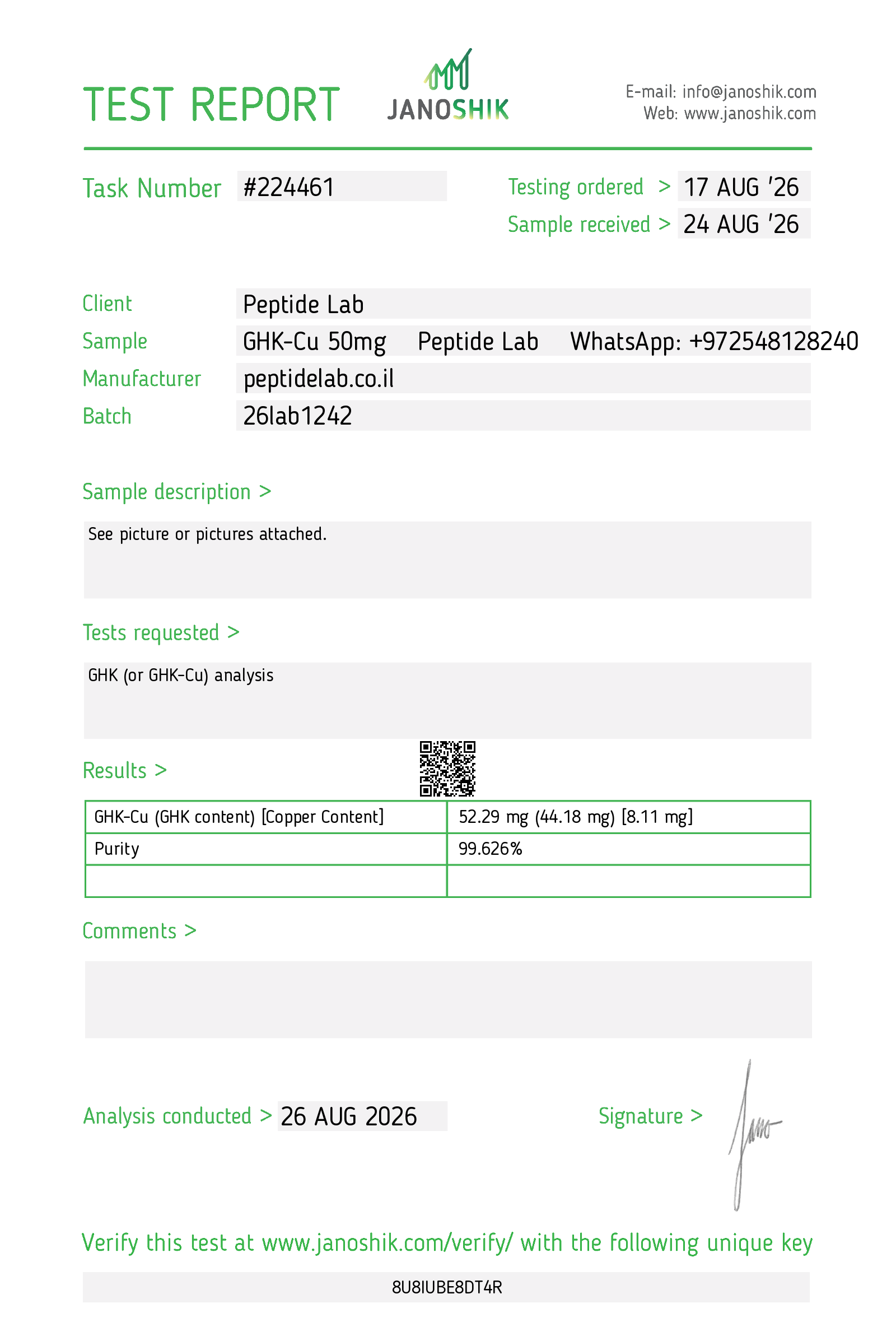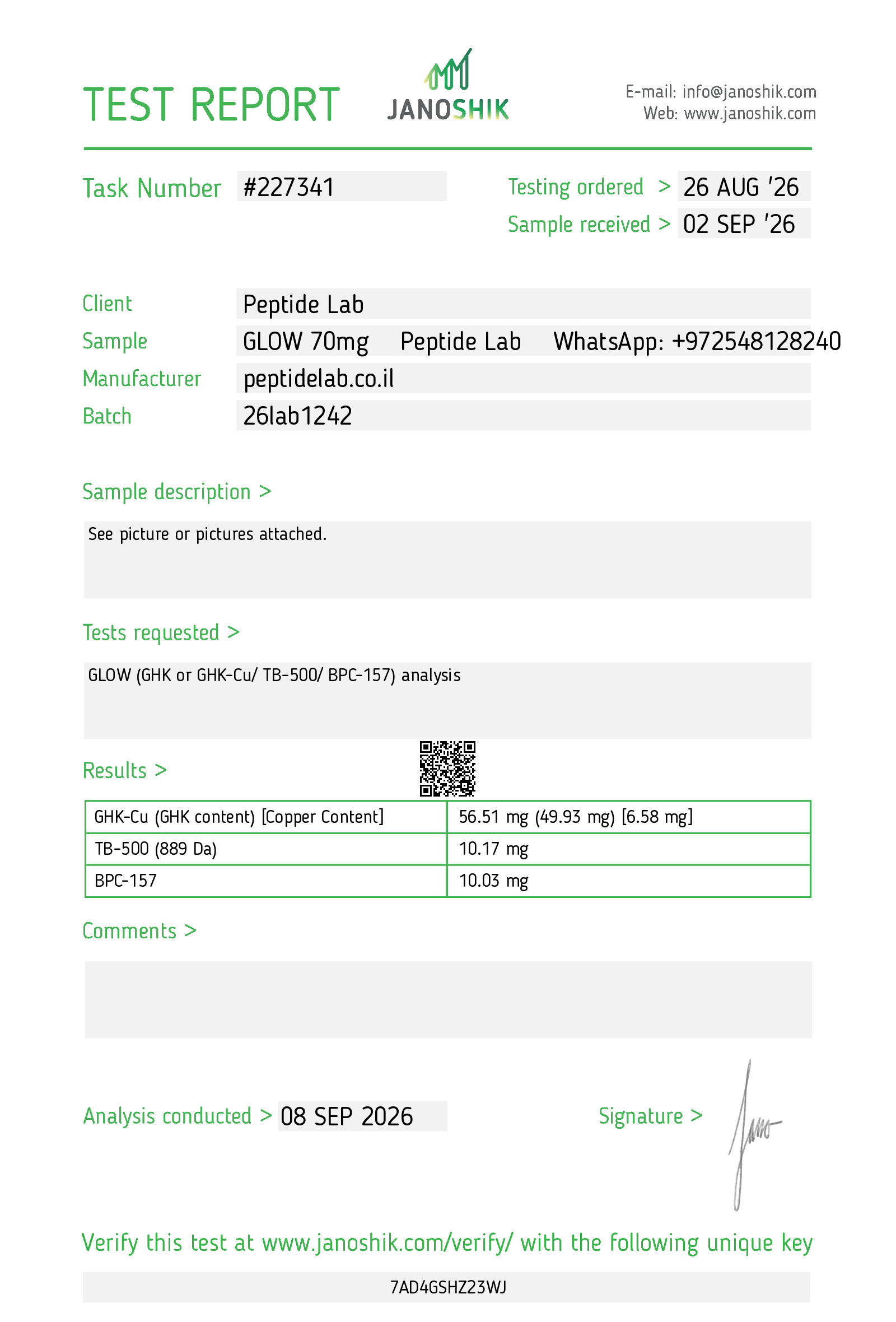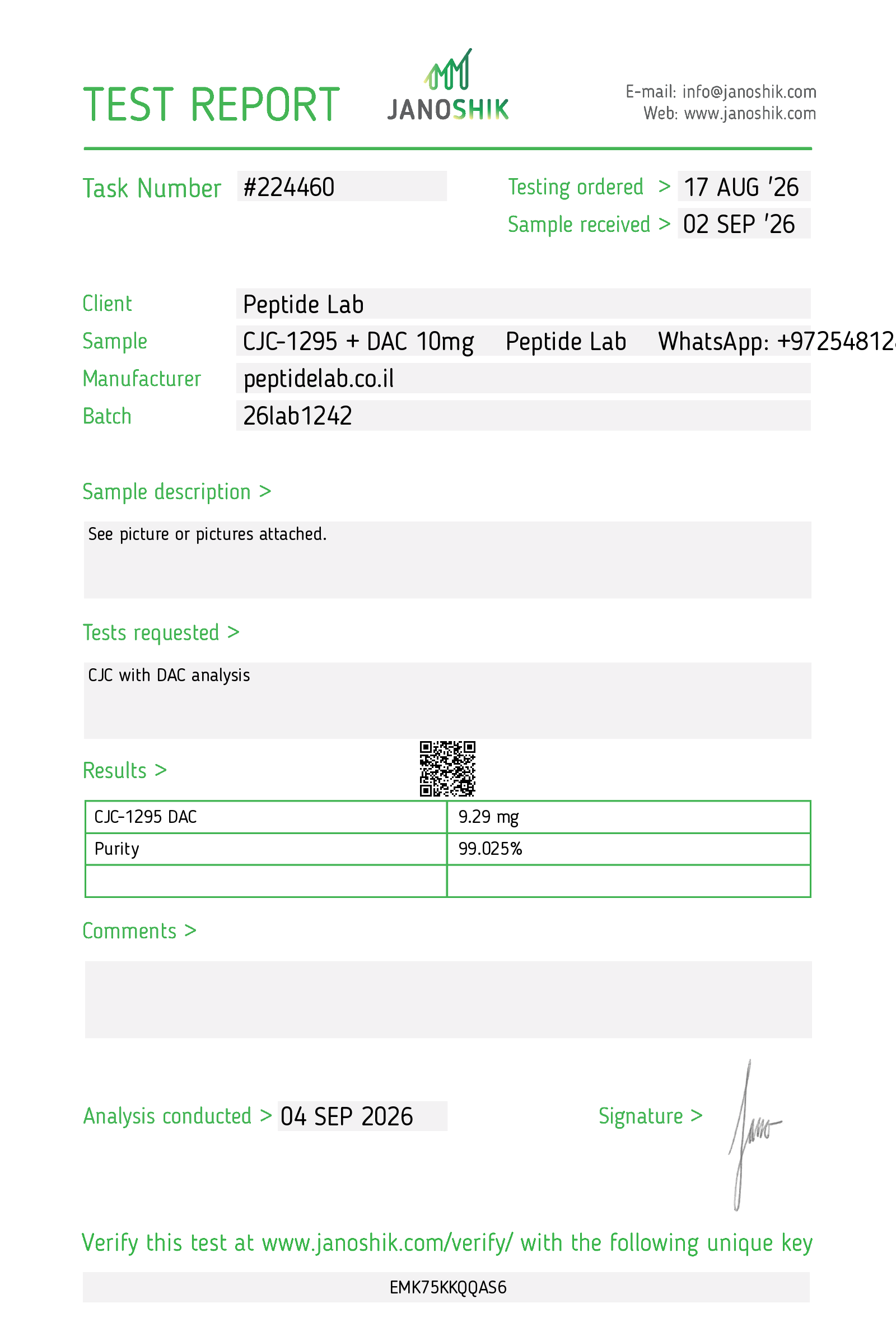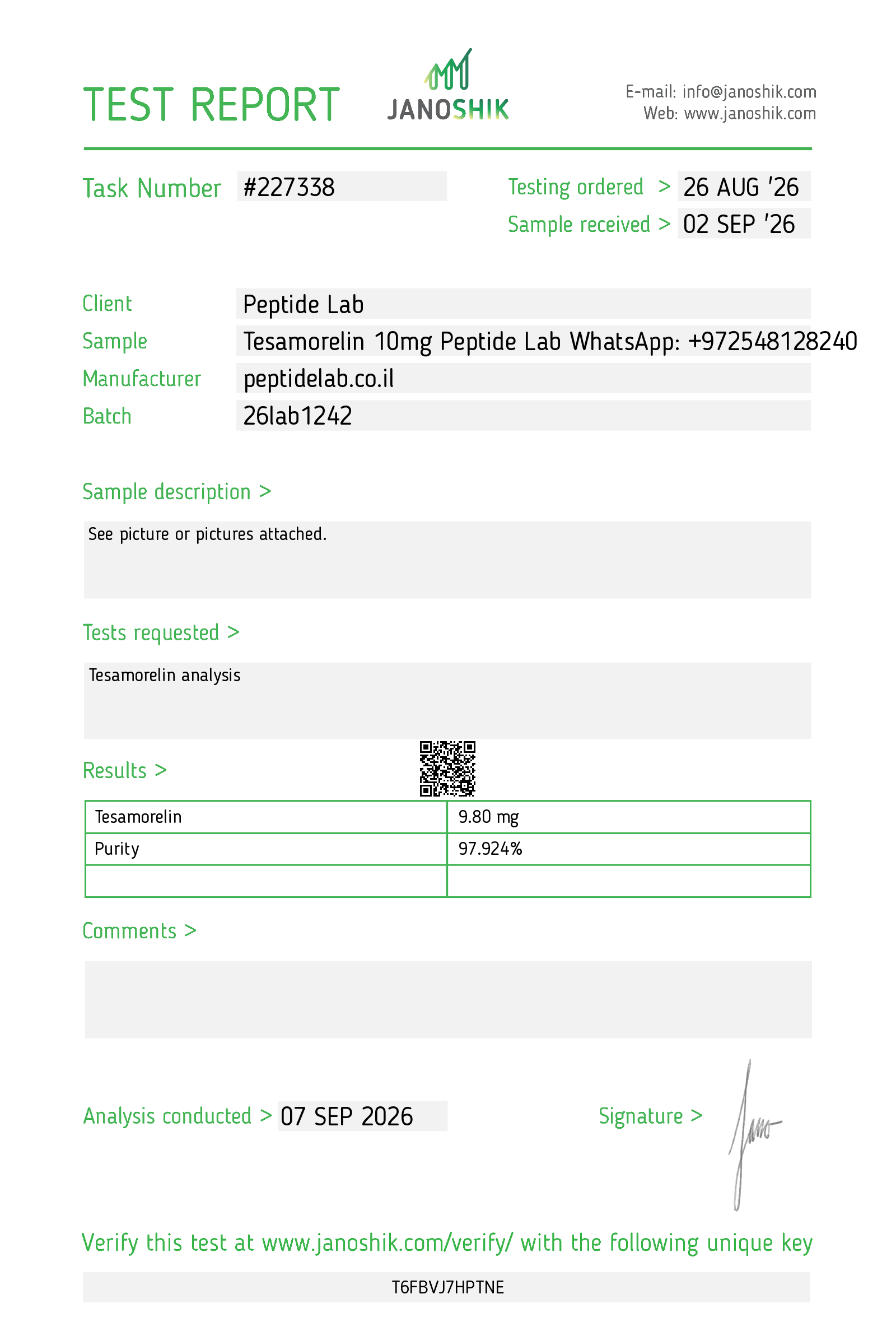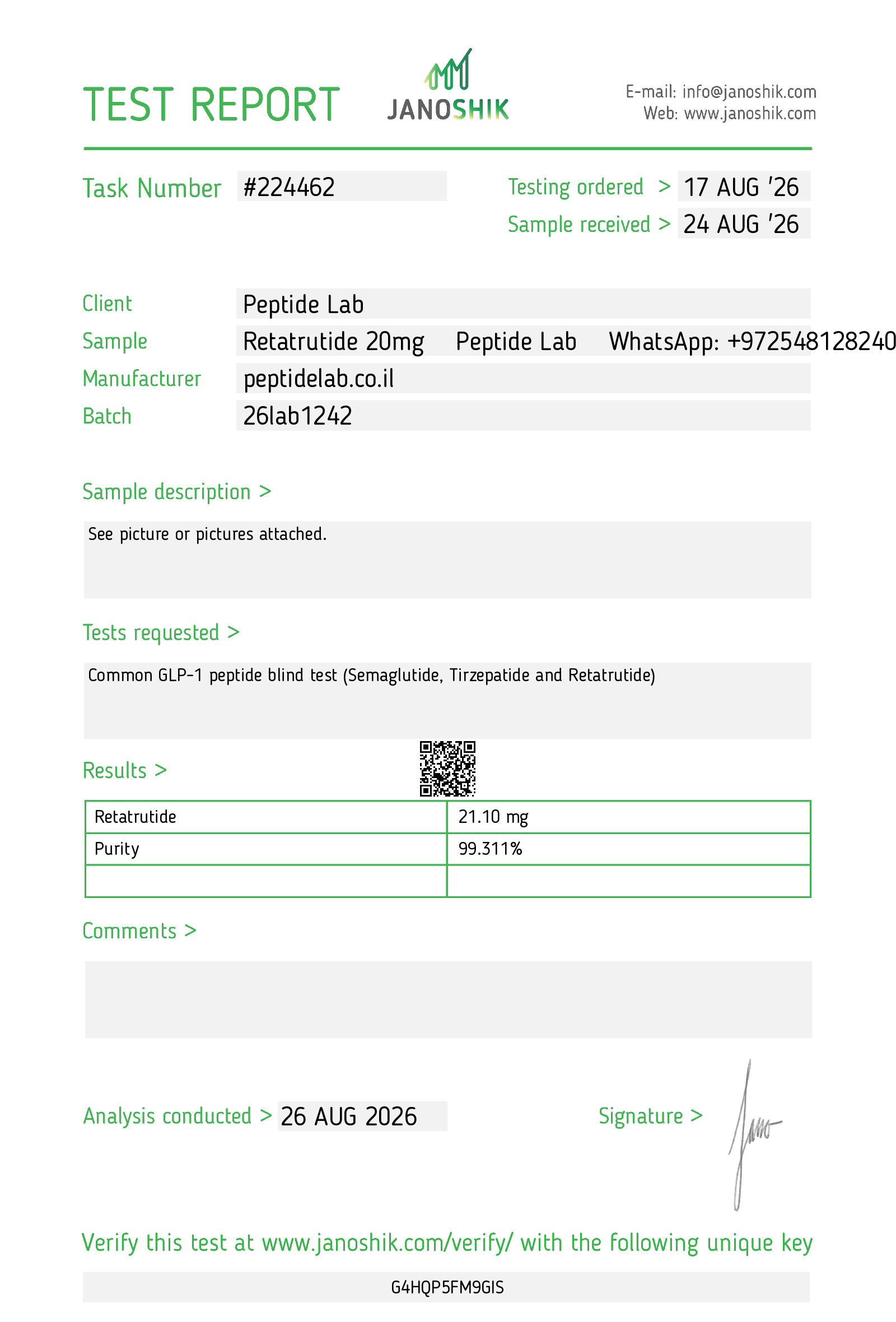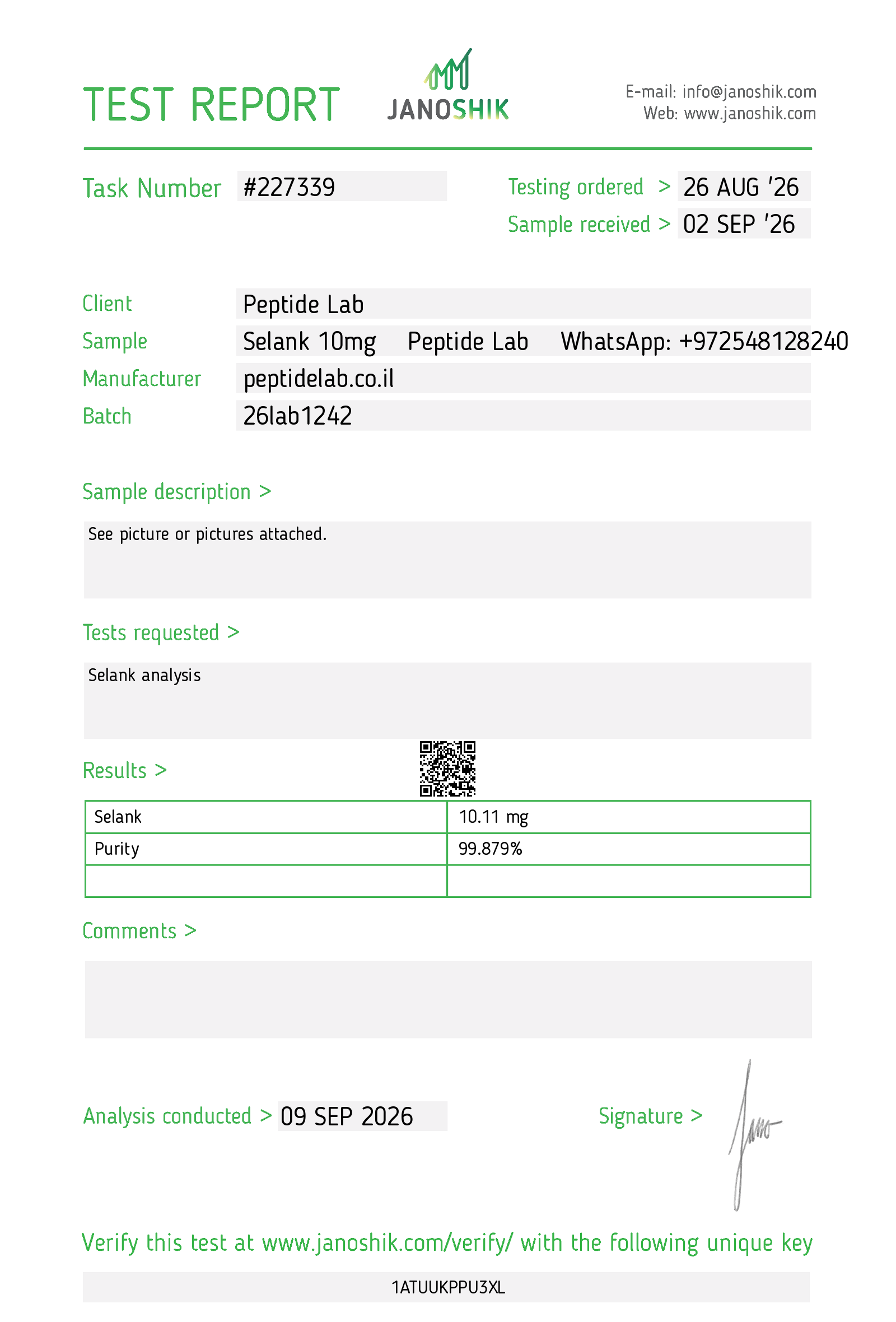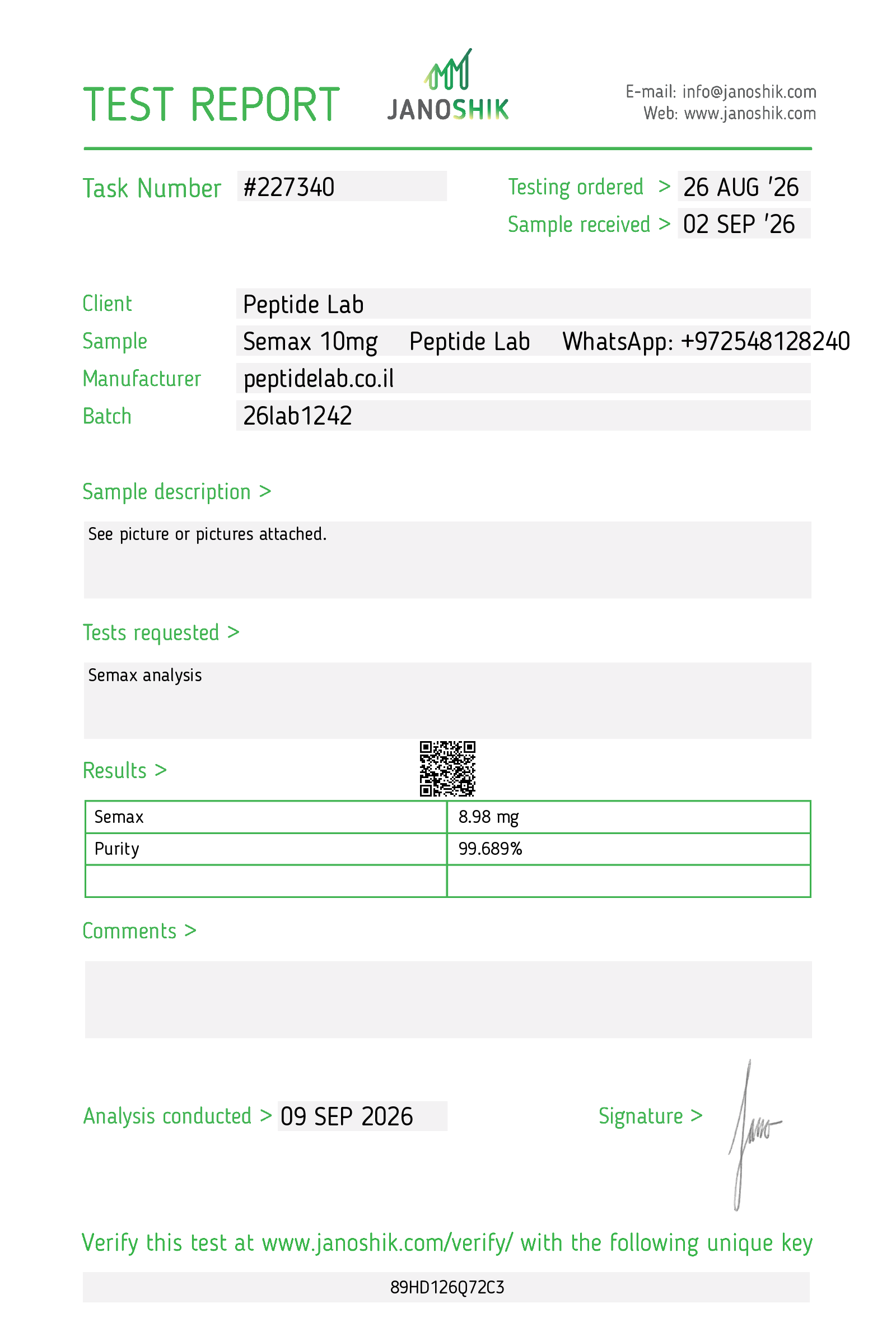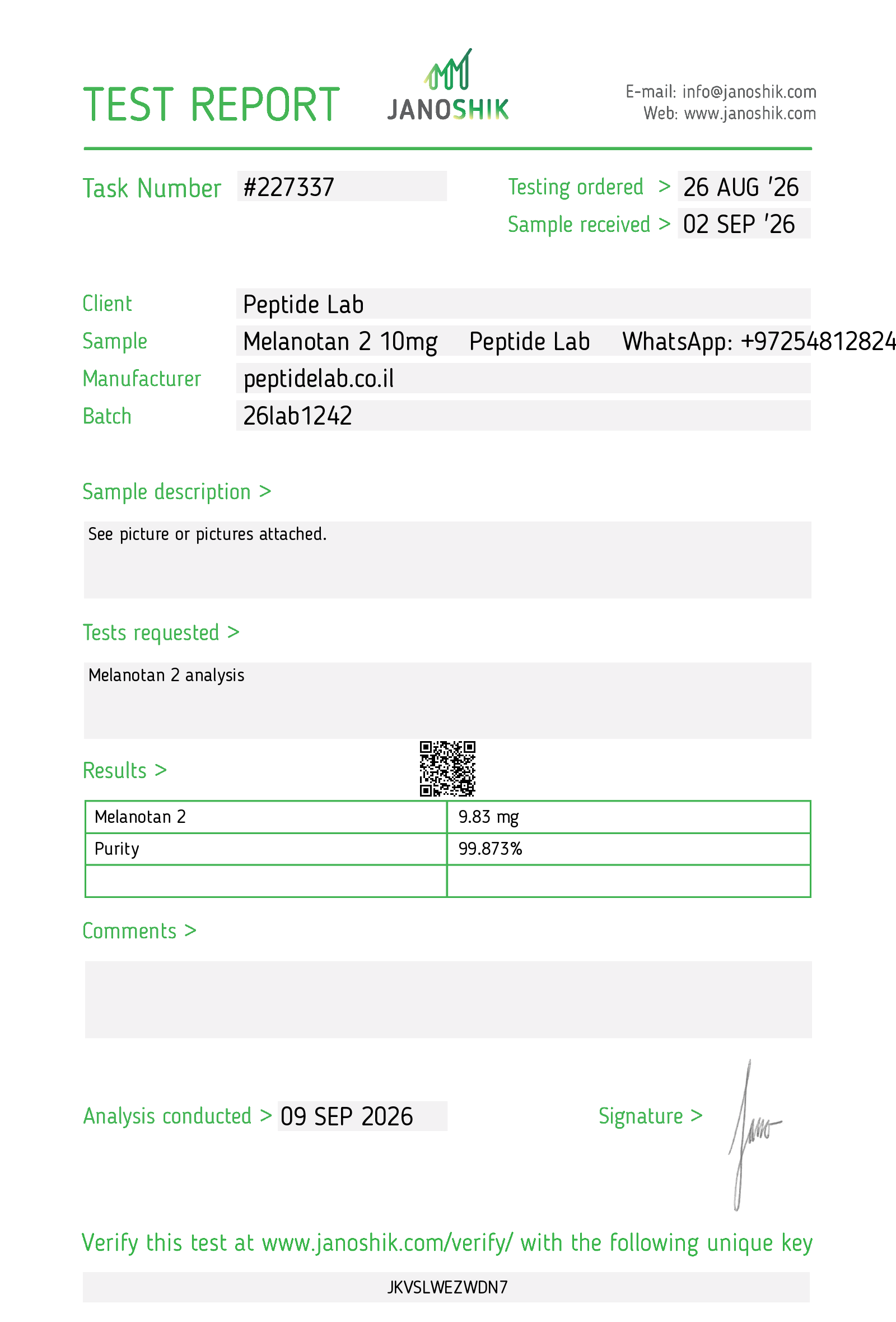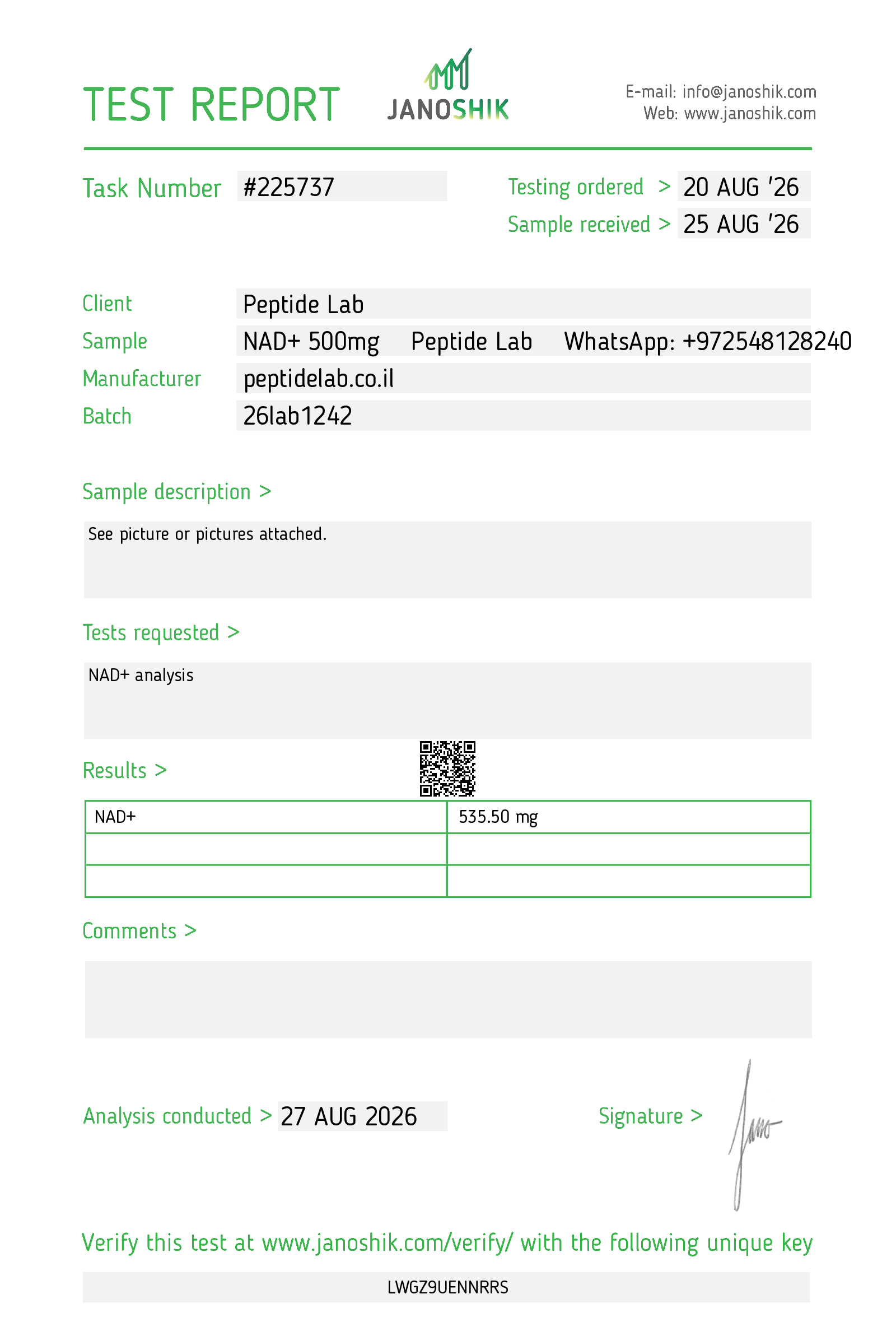
For research peptides, independent testing is the most reliable way to know what a vial actually contains. The results are recorded in a Certificate of Analysis (COA). This page explains what a COA shows and how to check that one is genuine.
Key points
- A COA records the laboratory results for a specific sample.
- HPLC measures purity; mass spectrometry confirms identity.
- Independent labs can issue a unique key so anyone can verify a report online.
What does a COA show?
A typical certificate includes the compound tested, the sample or batch reference, the test date and the results themselves:
- Identity (mass spectrometry): confirms that the molecular weight matches the intended peptide.
- Purity (HPLC): high-performance liquid chromatography separates the peptide from any impurities and expresses it as a percentage. A single, sharp peak on the chromatogram indicates a clean sample.
- Quantity: the measured amount of peptide in the vial, usually in milligrams, which can be compared with the labelled content.
Verifying a report online
Independent laboratories such as Janoshik Analytical issue each report with a unique verification key. Entering that key at janoshik.com/verify brings up the lab’s own record, so anyone can confirm that a certificate is authentic and unaltered rather than relying on an image alone.
For a fuller explanation of how to judge test results and suppliers, see our guide to choosing a research peptide supplier in the UK.
All products sold by Evil Peptides are intended for laboratory research use only and are not for human or veterinary use.
Current certificates
Independent Janoshik reports for the compounds below. Each report is shown exactly as issued; click to enlarge, then verify it with the key printed at the bottom.